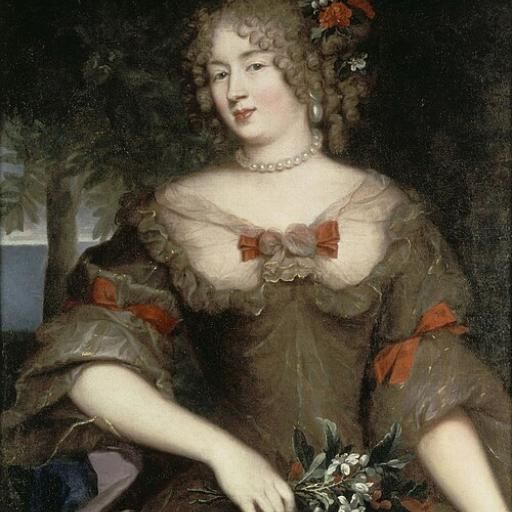
Musée Carnavalet exhibition: Madame de Sévigné, a Parisienne of her time
Categories : Exhibition, published on : 4/12/26
Just a few minutes' walk from the Fabric, the Musée Carnavalet is dedicating a major exhibition to Madame de Sévigné, one of the most remarkable women of 17th-century Paris, held in the very house where she once lived.
An exhibition inside the writer's own home
Few experiences are quite as immersive as this one. To visit the Musée Carnavalet for this exhibition is to step inside the actual walls where Madame de Sévigné lived from 1677 until her death in 1696. The setting is not a reconstruction; it is part of the story, and it tells the story of Paris alongside it.
A child of the Marais
Born on 5 February 1626 on the Place Royale, today's Place des Vosges, Marie de Rabutin-Chantal, known to the world as Madame de Sévigné, spent her entire life in the Marais. From an old Burgundian noble family, she received an unusually thorough education for a young woman of her time, thanks to her maternal grandparents. At eighteen, she married Henri de Sévigné. His death in a duel in 1651 left her widowed at twenty-five, sharp-minded and remarkably free, on the threshold of an extraordinary intellectual life.
Salons, wit and the making of a voice
It was in the refined literary circles of the Marquise de Rambouillet and Mademoiselle de Scudéry that Madame de Sévigné sharpened her style, vivid, sharp, and bracingly honest. She played a genuine part in shaping the galant culture that was then transforming the French language and leaving its mark on literature and the arts. Paris was changing fast, and she watched it all with a keen eye.
Writing so as not to lose her daughter
A correspondence born of absence
When her daughter Françoise-Marguerite left for Provence following her marriage to the Comte de Grignan in 1669, something remarkable began to take shape: a long and tender correspondence that would become one of the most singular works in French literature. Her letters, gathered and published, remain some of the finest windows we have onto the Grand Siècle.
"Her correspondence stands today as both a classic of French literature and an essential document for understanding the ideas, customs and events of the period."
Over 200 works brought together
The exhibition draws together paintings, objects and drawings from the museum's own collections, major French public institutions and private collections. It offers a fresh perspective on a woman we thought we knew, and reveals a Parisienne very much of her time, engaged, curious, alive to the world around her.
A journey into 17th-century Paris
During your stay, let yourself be drawn into the Paris of four centuries ago, just a short walk from the hotel. A genuine step back in time, before returning to the resolutely contemporary surroundings of the Fabric. Our team is on hand to help arrange your visit or point you towards other addresses in the neighbourhood.
Practical information
- Exhibition runs 15 April to 23 August 2026
- Open Tuesday to Sunday, 10am to 5.45pm (ticket office closes at 5.15pm)
- Closed Mondays and on certain public holidays
- Over 200 works: paintings, objects and drawings
- The Musée Carnavalet, where Madame de Sévigné lived from 1677 to 1696
- 10 minutes' walk from the Fabric, in the heart of the Marais
Photo ©wikimedia commons